Cow dung composting is one of the most efficient ways to convert livestock waste into valuable organic fertilizer. However, many producers struggle with long composting cycles, odor problems, and low profitability. By using the right cow dung composting equipment and optimized processes, it is possible to speed up composting and significantly increase returns.
1. Key Factors That Speed Up Cow Dung Composting
To make cow manure compost quickly, three factors must be controlled: oxygen, moisture, and temperature. Fresh cow dung usually contains high moisture and poor aeration, which slows down microbial activity.
Pre-treatment such as dewatering and mixing with carbon-rich materials (straw, sawdust, rice husk) improves porosity and creates ideal conditions for aerobic fermentation. Maintaining moisture at 55–65% and keeping compost temperature between 55–70°C helps accelerate organic matter decomposition while killing pathogens.
Adding compost starter cultures or beneficial microbes can further shorten the composting period and improve compost quality.
2. Essential Cow Dung Composting Equipment
Using professional cow dung composting machines is the most effective way to reduce composting time.
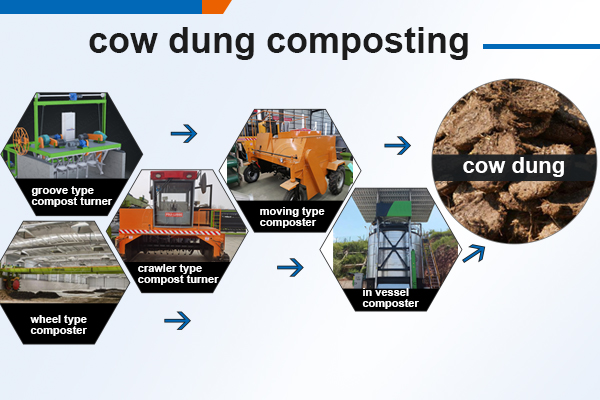
- Compost Turners (Windrow or Groove Type)
These machines ensure uniform oxygen supply and temperature distribution. Regular turning accelerates aerobic fermentation and prevents anaerobic zones. - Cow Manure Dewatering Machines
Solid-liquid separation equipment reduces excess moisture before composting, making fermentation faster and more stable. - Fermentation Tanks or Enclosed Composting Systems
For limited space or odor control requirements, enclosed systems provide controlled composting conditions and faster processing cycles.
Choosing the right composting system depends on raw material volume, site conditions, and production goals.
3. How to Choose the Right Cow Dung Composting Equipment
When selecting cow manure composting equipment, producers should consider:
- Daily manure processing capacity
- Available land and environmental regulations
- Desired composting cycle time
- Future expansion or granulation plans
A well-designed composting line should integrate pre-treatment, fermentation, and post-processing, ensuring stable output and lower operating costs.
4. Maximizing Profit from Cow Dung Compost
To maximize profits, cow dung compost should not stop at basic composting. Further processing creates higher-value products.
Screening and crushing improve product uniformity, while granulation systems can convert compost into marketable organic fertilizer pellets. Granular compost fertilizers are easier to store, transport, and sell at higher prices.
Some producers also blend compost with functional additives or beneficial microorganisms to produce bio organic fertilizer, targeting premium agricultural markets. Learn more!
Conclusion
Fast cow dung composting is achievable with the right process control and professional equipment. By investing in suitable composting machinery and upgrading compost into value-added fertilizer products, producers can turn cow manure into a stable and profitable business. Welcome to visit: https://www.fertilizerequipmentprice.com/cow-dung-composting-equipment/
Leave a Reply