When planning a bio fertilizer business, one of the first strategic decisions is whether to produce powder biofertilizer or granular biofertilizer. This choice directly affects equipment investment, operating cost, target market, and long-term scalability.
Instead of asking which form is “better,” experienced producers focus on which form fits their raw materials, budget, and customers.
Powder Biofertilizer: Lower Cost, Faster Market Entry
Powder biofertilizer, also known as powder organic fertilizer or powder bio-organic fertilizer, is widely used in small and medium-scale projects.
Key characteristics:
- Simple production process
- Lower initial investment
- Shorter production cycle
- Suitable for local and regional markets
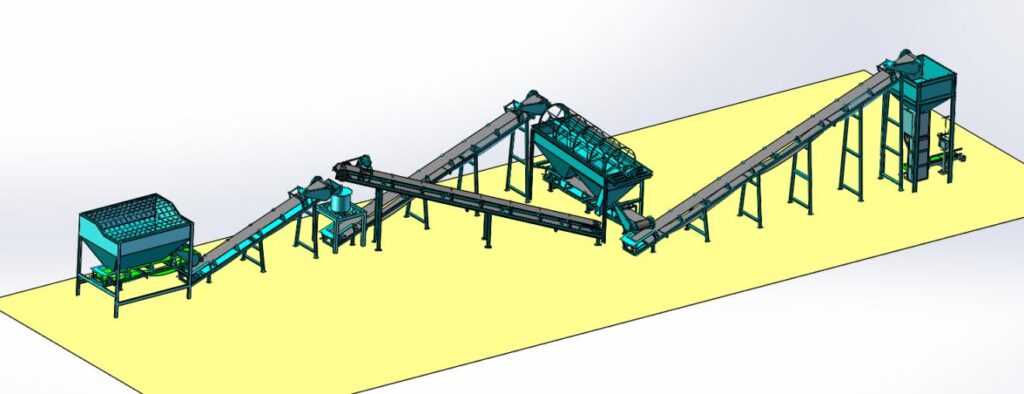
A typical powder biofertilizer production line includes composting, crushing, screening, mixing, and packaging. No granulation or drying system is required, which significantly reduces capital cost and energy consumption.
Powder products are often favored by:
- Price-sensitive markets
- Farms using manual or semi-mechanical application
- Projects starting with limited budgets
However, powder fertilizer has drawbacks such as dust generation, lower bulk density, and limited transport efficiency.
Granular Biofertilizer: Higher Value, Better Market Acceptance
Granular biofertilizer, also called pelletized biofertilizer or bio fertilizer granules, is designed for commercial-scale distribution.
Main advantages include:
- Uniform particle size and better flowability
- Compatibility with mechanical spreading equipment
- Reduced dust and material loss
- Higher product value and brand perception
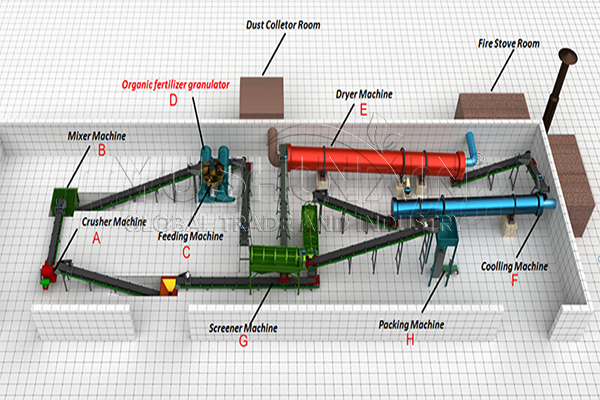
A granular biofertilizer production line requires additional systems such as bio fertilizer granulators, dryers, coolers, and coating machines. As a result, the investment is higher, but the final product is easier to transport, store, and sell at scale.
Granular fertilizer is more suitable for:
- National or export-oriented markets
- Dealers and distributors
- Mechanized farming systems
How to Choose: Practical Decision Factors
To decide between powder and granular biofertilizer, consider these factors:
1. Investment Budget
Powder lines are ideal for entry-level investment. Granular lines require higher upfront cost but offer stronger scalability.
2. Target Customers
If your buyers are local farmers, powder may be sufficient. If you sell through distributors, granules are often preferred.
3. Raw Material Conditions
High-moisture or fibrous compost may favor powder processing unless drying is added.
4. Long-Term Business Plan
Many producers start with powder fertilizer and later upgrade to granulation as demand grows. Contact YUSHUNXIN to get your bio fertilizer production plant!
A Flexible Strategy Used by Many Producers
An increasing number of biofertilizer manufacturers adopt a modular production approach—starting with powder biofertilizer production and reserving space for future granulation equipment. This strategy controls risk while keeping expansion options open.
In summary, both powder and granular biofertilizer have clear application scenarios. The right choice depends on market positioning, budget control, and growth expectations. Understanding these differences helps investors select the most suitable bio fertilizer production solution rather than following trends blindly. If you need a business plan, welcome to visit: https://www.biofertilizerproduction.com/product/bio-organic-fertilizer-production-line/
Leave a Reply