Designing a compost granulation line is not just an engineering challenge; it is a financial strategy. Smart decisions in layout, equipment selection, and automation can dramatically reduce overall granular compost fertilizer plant cost while maintaining product quality and future expansion potential.
1. Layout Planning: Start with Material Flow
The first and most overlooked cost lever is the plant layout. A linear, one‑directional material flow—from compost reception to crushing, mixing, granulation, drying, screening, and packaging—reduces belt lengths, transfer points, and manual handling.
When clients ask how much investment for organic fertilizer granulation plant is really needed, layout optimization is one of the first places to look for savings. Compact layouts that keep pre‑treatment and granulation areas close together lower civil construction costs, wiring lengths, and forklift traffic, all of which translate directly into reduced operating expenditure.
2. Choosing the Right Capacity and System Scale
Over‑sizing a plant ties up capital, while under‑sizing limits profitability. A clear capacity target—such as 3–5 tons per hour—is crucial to controlling organic fertilizer granulation project cost from day one.
For many medium‑sized farms or regional fertilizer producers, a 5tph compost granules making system price offers a good benchmark. This scale is large enough to benefit from economies of scale but small enough to avoid excessive building and power infrastructure costs. Phased capacity—designing the layout for future expansion but installing only part of the line initially—can also balance cash flow and market uncertainty.
3. Equipment Selection: Matching Technology to Your Raw Materials
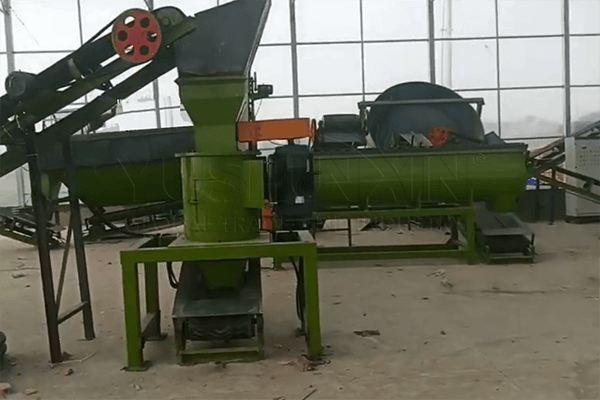
The choice of granulation technology has a major impact on capital cost, energy consumption, and maintenance. For high‑moisture compost and organic materials, many producers compare disc granulators with rotary drums. A carefully sized line can keep drum granulation compost fertilizer plant cost within budget while delivering strong output and durable granules for commercial markets.
It is important to match equipment to raw material characteristics (moisture, fiber content, particle size) so that you avoid over‑processing. For example, using a simple crusher where a mill is unnecessary, or eliminating redundant mixing steps, helps cut both investment and power usage without compromising granule quality.
4. Working with the Right Manufacturers
Partner choice is another hidden driver of cost. Experienced industrial compost fertilizer making machine manufacturers can often redesign sections of a process to reduce the number of machines required, integrate functions, or standardize components.
This not only reduces initial equipment purchase but also lowers spare parts inventory and simplifies maintenance training. Look for suppliers who can provide process flow design, 3D layout, and energy balance calculations, not just machine catalogs. A slightly higher unit price from a full‑solution provider can still produce a lower total project cost.
5. Smart Automation: Partial, Not Blind, Automation
Full automation is not always necessary, especially for small and medium projects. Targeted automation—such as automatic batching, moisture control in drying, and automatic bagging—often provides the best return. These areas directly impact product consistency, labor intensity, and rework rates.
By automating only the most labor‑intensive and quality‑critical steps, investors can control granular compost fertilizer plant cost while keeping the line flexible. Manual or semi‑automatic operations in non‑critical areas (like certain conveying or stacking tasks) can be retained to reduce upfront investment and allow adaptation to changing product specifications.
In short, cost‑saving design for a compost granulation plant is about making coordinated decisions: a rational layout, fit‑for‑purpose equipment, and focused automation. Treating these as an integrated system, rather than isolated choices, is the key to achieving a competitive and sustainable production line. If you need more details, you can visit https://www.granulatedcompostsolutions.com/product/granular-compost-fertilizer-plant-cost/
Leave a Reply