Granulation is a core step in biofertilizer manufacturing, directly affecting product form, storage stability, nutrient efficiency, and market value. With the growing demand for organic and biological fertilizers, manufacturers are paying more attention to biofertilizer granulation technology rather than simple powder processing.
This article explains the main granulation methods used in biofertilizer production and how to select the right granulation equipment based on raw materials, capacity, and investment goals.
Why Granulation Matters in Biofertilizer Production
Compared with powdered fertilizer, granular biofertilizer offers better flowability, easier application, reduced dust loss, and higher commercial acceptance. Granulation also helps improve:
- Nutrient uniformity
- Microbial survival rate (with proper temperature control)
- Packaging and transportation efficiency
Therefore, choosing the correct fertilizer granulation machine is a strategic decision, not just a technical one.
Main Biofertilizer Granulation Technologies
Different raw materials and production targets require different granulation approaches. Common technologies include:
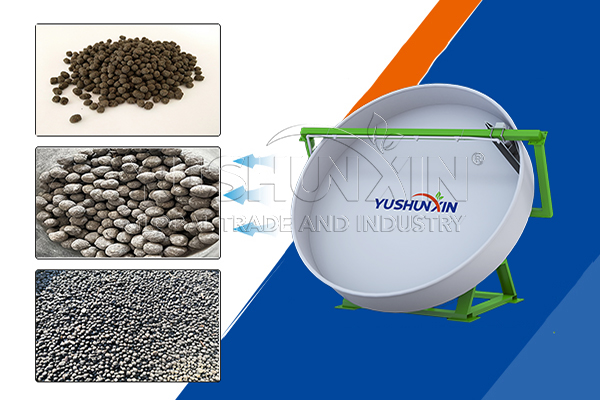
Disc granulation
Disc pelletizers are widely used for small to medium-scale biofertilizer plants. They offer flexible particle size control and low investment cost, making them suitable for organic manure-based fertilizers and composted materials.
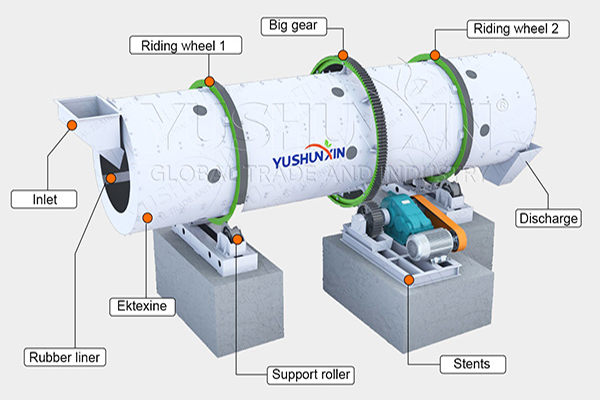
Drum granulation
Rotary drum granulators are designed for continuous and large-capacity production. They handle higher throughput and mixed formulations well, often used in industrial biofertilizer granulation lines with drying and cooling systems.
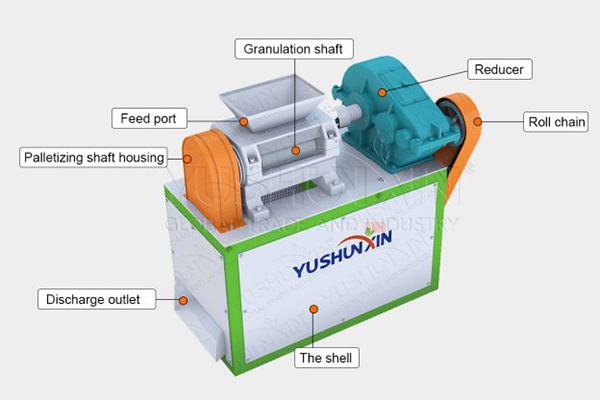
Roller compaction granulation
For moisture-sensitive materials, roller compactor granulation allows dry granulation without adding water. This method is ideal for functional biofertilizers, microbial fertilizers, and formulas requiring low-temperature processing.
Extrusion granulation
Extrusion granulators are suitable for organic fertilizer with higher fiber content. They produce dense granules and are often used in medium-capacity organic fertilizer plants.
How to Choose the Right Biofertilizer Granulator
When selecting a biofertilizer granulation machine, manufacturers should focus on practical production conditions rather than equipment size alone.
Key selection factors include:
- Raw material moisture and fiber content
- Desired granule shape and size range
- Required production capacity (t/h)
- Budget and operating cost
- Compatibility with drying, coating, and packaging systems
For example, compost-based biofertilizers often perform better with disc or drum granulation, while fine powder biological additives are more suitable for roller compaction.
Equipment Configuration Beyond the Granulator
A reliable biofertilizer granulation production line includes more than just the granulator. Supporting equipment such as crushers, mixers, dryers, screeners, and coating machines plays a crucial role in granule quality and production stability.
Ignoring upstream and downstream matching often leads to inconsistent output and higher operating costs. Consult YUSHUNXIN to get your bio fertilizer granulation system !
Conclusion
Biofertilizer granulation technology is not one-size-fits-all. Understanding the strengths and limitations of each granulation method helps producers build an efficient, scalable, and cost-controlled fertilizer production system.
For biofertilizer manufacturers, the right granulation technology is the foundation of long-term product competitiveness and profitability. If you need a business plan, welcome to visit : https://www.biofertilizerproduction.com/product/bio-fertilizer-granulator/
Leave a Reply